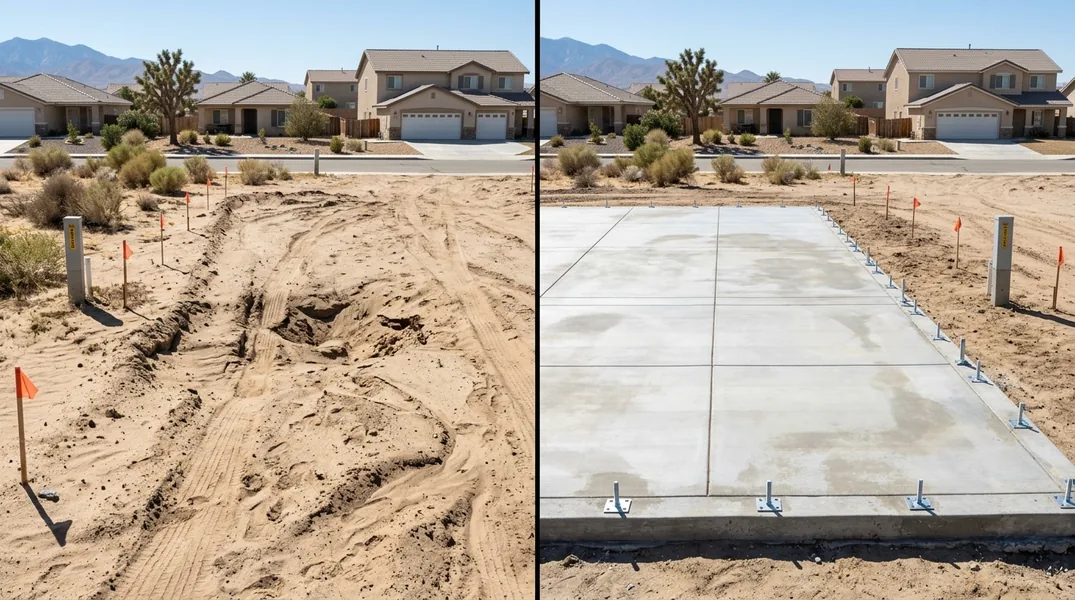
Understanding New Construction Slabs in the Antelope Valley
Buying a new construction home in Lancaster is exciting, but it comes with responsibilities that many first-time buyers overlook. One of the most critical components of any home is its foundation, and in our region, most residential properties sit on concrete slab foundations. Unlike traditional basement or crawl space foundations, a slab foundation is a single layer of concrete poured directly onto the ground, and it serves as both the foundation and the floor of your home.
The Antelope Valley's climate and soil conditions make slab foundations particularly common here. However, the same environmental factors that make slabs practical also create unique challenges. Our area experiences significant temperature fluctuations between seasons, and the soil composition can vary dramatically from property to property. These conditions mean that new home concrete in the Antelope Valley requires careful inspection before you sign on the dotted line. Understanding what you're looking at during your final walkthrough can save you thousands in repairs down the road.
Why Slab Foundation Inspection Matters Before Closing
A slab foundation inspection is not optional if you want to protect your investment. Many homebuyers assume that because a home is brand new, the foundation must be perfect. Unfortunately, that is not always the case. Concrete is poured by human hands, and mistakes happen during construction. Additionally, the concrete may have already begun to settle or respond to environmental stresses even before you take possession of the property.
During your pre-closing walkthrough, you should spend time examining the concrete slab both inside and outside your home. Look for visible cracks, uneven surfaces, or areas where the concrete appears to be separating from walls or other structures. Pay special attention to the garage floor, entryways, and any areas where the slab meets exterior walls. A professional Lancaster home inspector should evaluate these areas, but you can also educate yourself on what constitutes a serious problem versus normal settling.
Foundation Cracks in New Build Homes: What's Normal and What Isn't
Foundation cracks in new build Lancaster homes are more common than you might think, but not all cracks are created equal. When concrete is first poured, it begins a curing process that can take weeks or even months. During this time, the concrete naturally shrinks, and this shrinkage often creates hairline cracks. These are typically cosmetic and do not indicate a structural problem. Hairline cracks are usually less than one-eighth of an inch wide and appear randomly across the slab surface.
However, wider cracks or patterns of cracks warrant serious attention. If you notice cracks wider than one-quarter inch, cracks that run in a stair-step pattern along mortar joints, or cracks that are actively growing, these may indicate structural issues or problems with soil settlement. Horizontal cracks are particularly concerning because they can suggest pressure from soil movement or moisture problems beneath the slab. Before closing, ask your home inspector to document all cracks with photographs and measurements. If significant cracks are present, you may want to hire a structural engineer for a second opinion, or negotiate with the builder for repairs before you take possession.
Checking for Water Damage and Moisture Issues Under New Slabs
One of the most insidious problems with concrete slabs is moisture intrusion from below. Unlike visible cracks, water damage beneath a slab can go unnoticed for months or even years before it causes noticeable problems like mold, musty odors, or damage to flooring materials. During your inspection, look for any signs of moisture on the concrete surface, discoloration, or efflorescence (a white, chalky residue that indicates water is moving through the concrete).
Ask the builder or inspector whether a moisture barrier was installed beneath the slab before the concrete was poured. In Lancaster, where our climate can be dry but occasional heavy rains do occur, a proper moisture barrier is essential. Additionally, check that the grading around your home slopes away from the foundation so that water runs away from the structure rather than pooling against it. If you notice any concerns about moisture, you may want to request that the builder install or improve drainage systems before closing, or factor the cost of future remediation into your negotiation.
When to Call a Professional for Slab Evaluation Near Me
While homeowner inspections are valuable, a professional evaluation of your slab foundation in Lancaster is worth the investment. A qualified structural engineer or foundation specialist can perform tests that go beyond visual inspection, such as measuring concrete thickness, checking for voids beneath the slab using ground-penetrating radar, and assessing soil stability. These professionals understand the specific challenges of building in the Antelope Valley and can provide expert guidance on whether issues you've identified are likely to worsen over time.
If you discover significant problems during your inspection, do not proceed to closing without professional evaluation and builder remediation. Many builders are willing to address foundation issues before closing because it is far less expensive than dealing with liability claims after you own the home. If you need guidance on finding qualified professionals or want to discuss your specific concerns, contact Lancaster Concrete at (661) 718-4824. While we specialize in Concrete Driveways and other concrete services, we work regularly with homeowners and builders in the area and can point you toward trusted structural engineers and inspectors.
Protecting Your New Slab After Closing: Maintenance and Long-Term Care
Once you close on your new home, your responsibilities for slab maintenance begin immediately. Proper care during the first year is critical because the concrete continues to cure and adjust to its environment. Avoid parking heavy vehicles on the driveway slab for at least 30 days after you take possession, as the concrete may not have reached full strength. Keep the slab clean and dry, and address any spills or stains promptly to prevent permanent discoloration or damage.
In the years ahead, monitor your slab for any changes. Take photographs of existing cracks and their locations so you can track whether they are growing or remaining stable. Seal any cracks that develop to prevent water from seeping beneath the slab. If you need repairs or resurfacing work down the road, Concrete Repair & Resurfacing services can address many common issues. Regular maintenance and prompt attention to problems will help ensure that your foundation remains stable and your home's value is protected for years to come.
Looking for a professional concrete contractor in Lancaster? Lancaster Concrete responds fast for all your concrete needs.
Get a Free QuoteOur services: Concrete Driveways · Concrete Patios · Stamped & Decorative Concrete